Olha
Why no two pieces are ever exactly the same
It's not a marketing line. Here's what actually changes from one piece to the next, and why I can't help it.
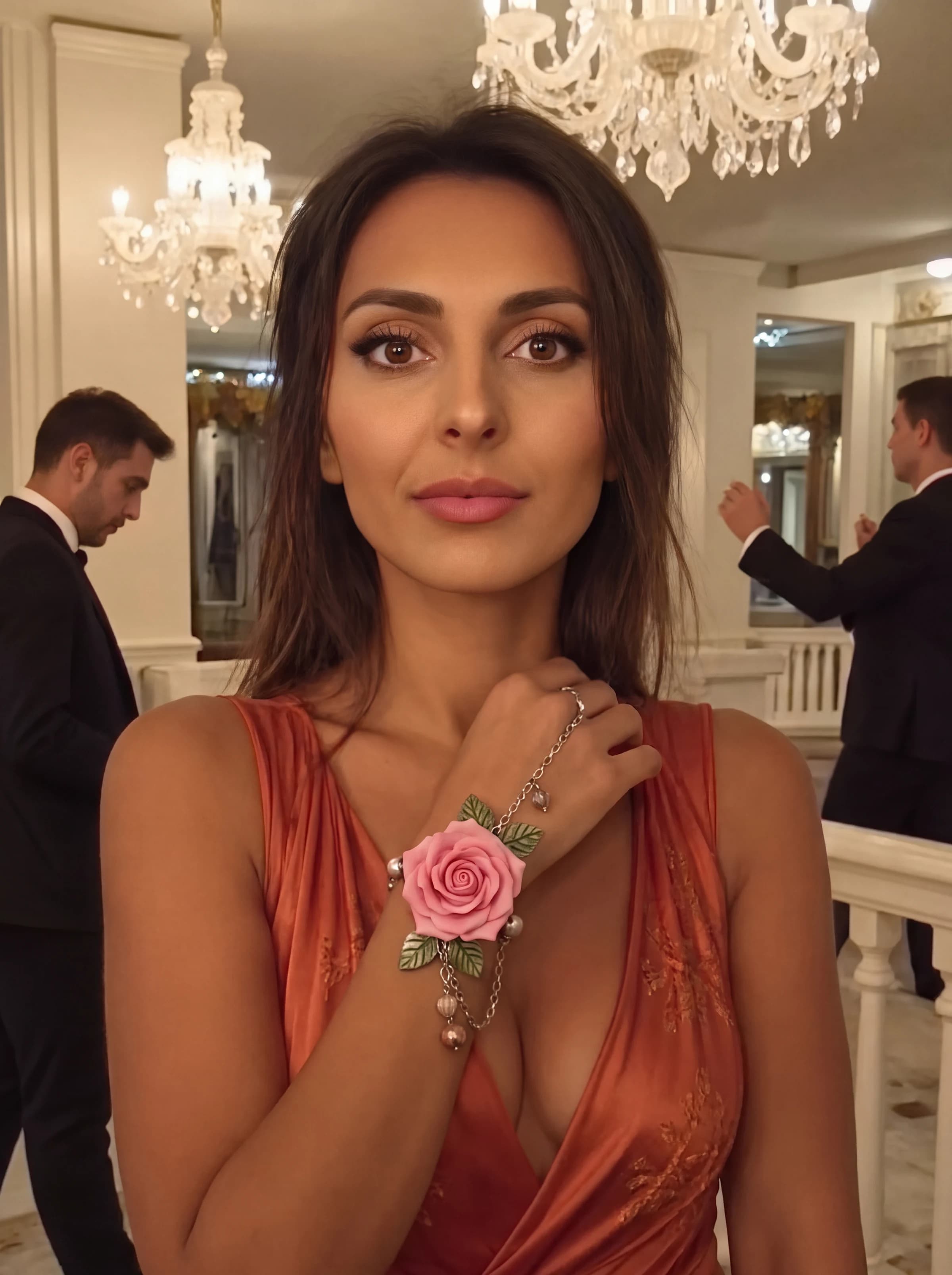
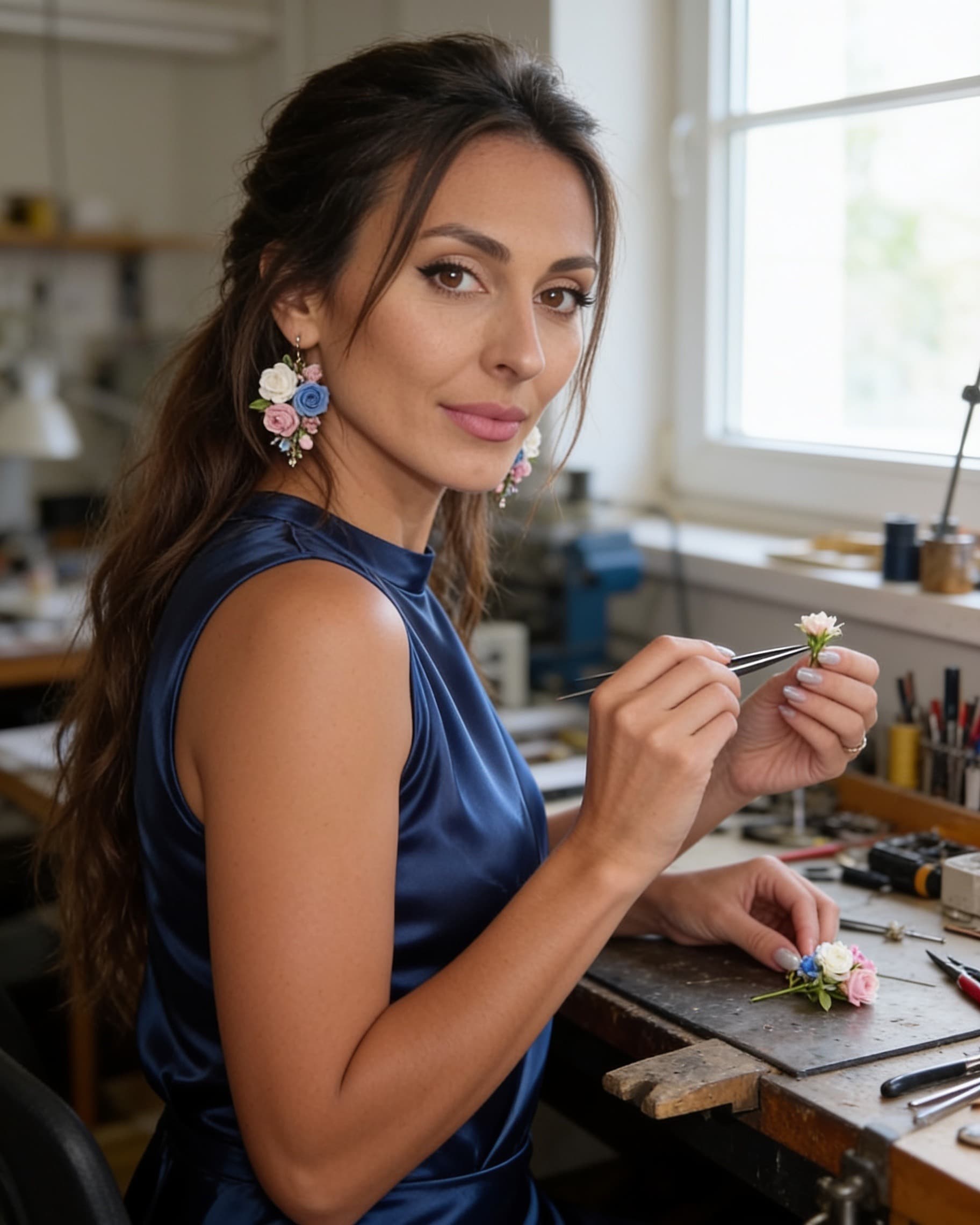
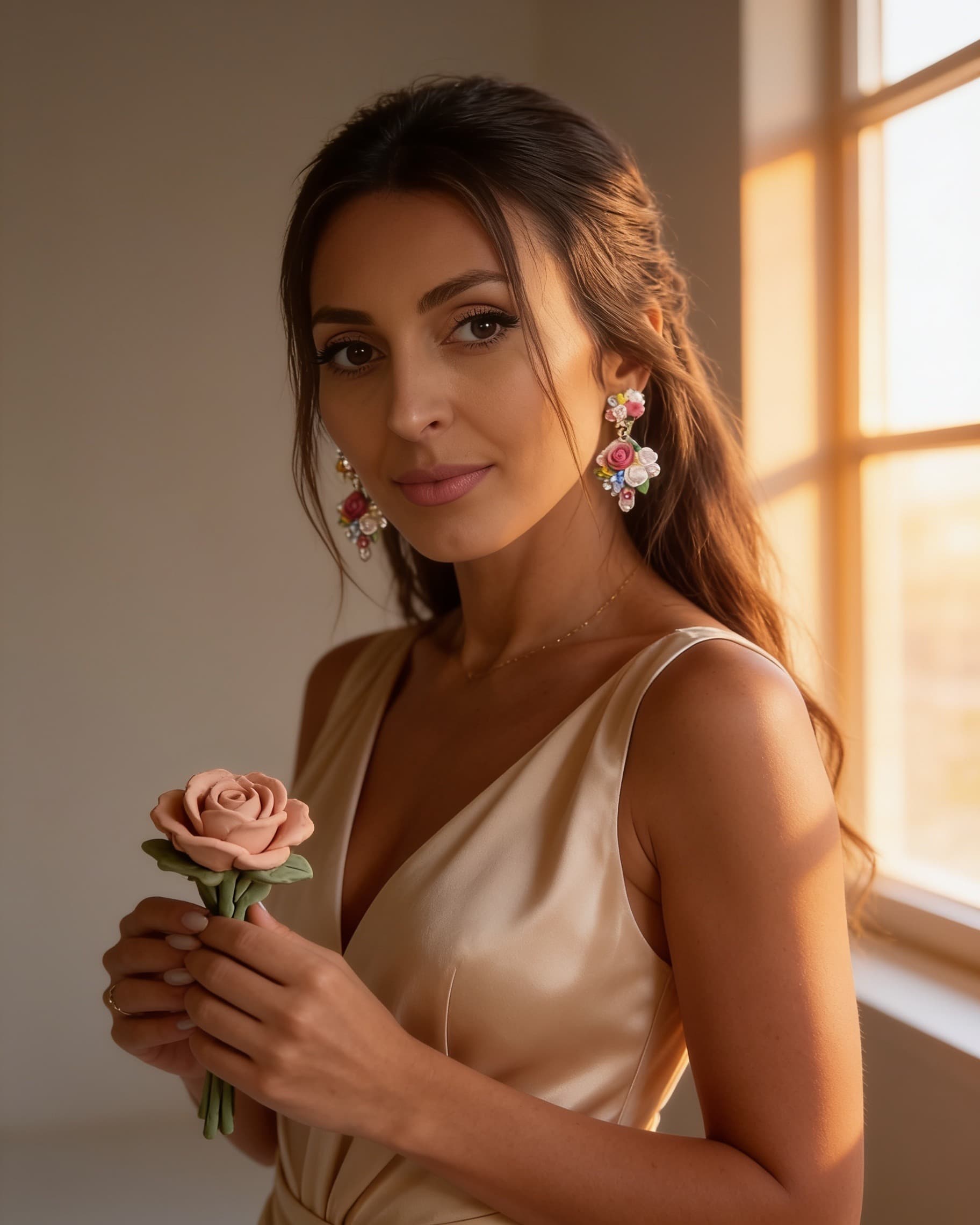
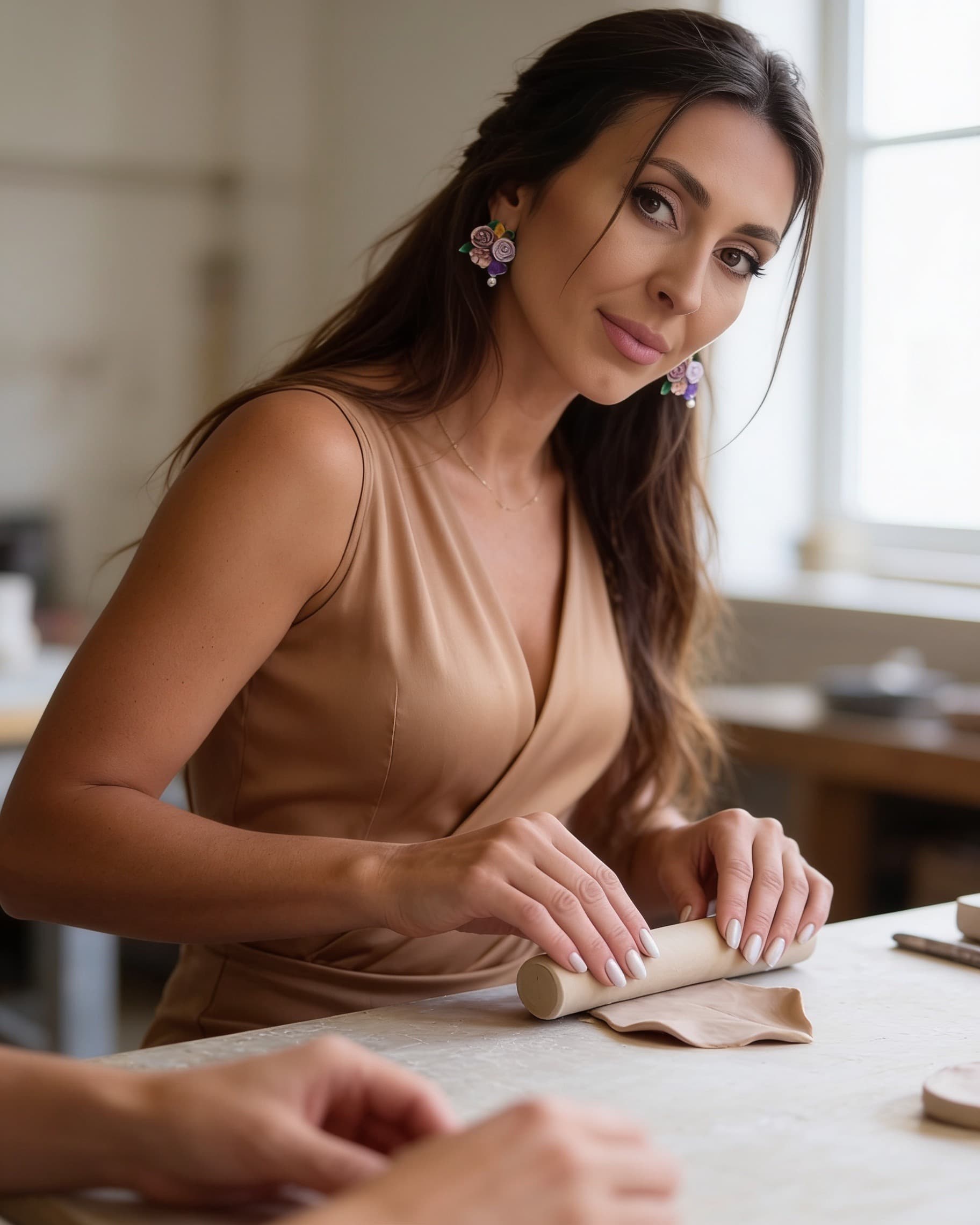
Each flower is rolled by hand from the centre outwards. I stretch an oval of clay, thin it with my finger until it's almost translucent at the edge, and wrap it around the previous petal. A medium rose takes between nine and fourteen petals.
Between nine and fourteen, not exactly twelve. It depends on how thin the sheet comes out that day, on the temperature of the room, and on how much I've already worked the clay. When my hands are warmer the clay stretches further, so fewer petals are needed for the same size.
The colour shifts too. I mix the tones by eye from base blocks, and two batches of the same pink are never identical. Very similar, yes. Identical, no.
I could standardise it with silicone moulds. Every piece would come out the same, and it would take a quarter of the time. They'd also lose the irregular edge that makes them look like flowers rather than pieces of plastic.
So when I say that no one else is wearing your piece, it's not a figure of speech. I genuinely wouldn't know how to repeat it. What's currently made is in the shop.